博客

  • Your Daily AI Update: Robots in Factories and AI Chatbots in Courts

    Your Daily AI Update: Robots in Factories and AI Chatbots in Courts

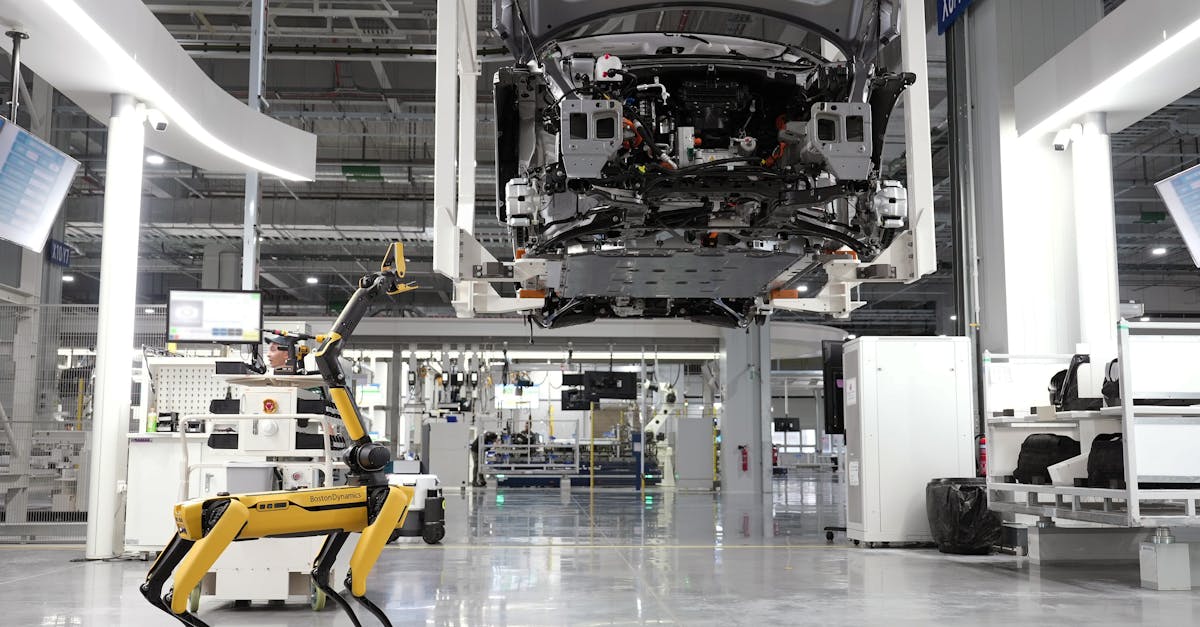
    Hey, have you been keeping up with the latest AI news? There’s been some interesting developments recently. Boston Dynamics is working on an AI-powered humanoid robot that can learn to work in a factory. This could be a big deal for manufacturing and automation. But it’s not just about robots – Alaska’s court system has also been experimenting with an AI chatbot. Unfortunately, it didn’t quite go as planned.

    Meanwhile, India has ordered Musk’s X to fix some issues with their AI content. It seems like there were some problems with ‘obscene’ content being generated. And in the world of research, DeepSeek has been working on a new algorithm to fix instability in hyper connections. It’s based on a 1967 matrix normalization algorithm – who knew old ideas could still be useful today?

    These are just a few of the latest updates from the world of AI. It’s exciting to see how this technology is evolving and being applied in different areas. From robots in factories to chatbots in courts, AI is definitely changing the way we do things.

    If you’re curious about the sources, I’ve got you covered. You can check out the links to learn more about each of these stories. And if you’ve got any thoughts on the latest AI developments, I’d love to hear them.


  • Finding Your Next Opportunity: A Guide to Hiring and Job Seeking in Machine Learning

    Finding Your Next Opportunity: A Guide to Hiring and Job Seeking in Machine Learning

    If you’re looking for a new challenge in the machine learning field, you’re not alone. With the constant evolution of technology, it can be tough to find the right fit. That’s why communities like the Machine Learning subreddit are so valuable. They offer a space for people to connect, share opportunities, and find their next career move.

    For those looking to hire, it’s essential to be clear about what you’re looking for. This includes details like location, salary, and whether the position is remote, full-time, or contract-based. A brief overview of the role and what you expect from the candidate can also go a long way in attracting the right talent.

    On the other hand, if you’re searching for a job, it’s crucial to have a solid understanding of what you’re looking for. This might include your desired salary, location preferences, and the type of work you’re interested in. Having a resume ready and a brief summary of your experience and skills can make you a more attractive candidate to potential employers.

    Using templates can help streamline the process, making it easier for both parties to find what they’re looking for. For job postings, a template might include:

    * Location
    * Salary
    * Remote or relocation options
    * Full-time, contract, or part-time
    * Brief overview of the role and requirements

    For those looking to be hired, a template could include:

    * Location
    * Salary expectation
    * Remote or relocation preferences
    * Full-time, contract, or part-time interests
    * Link to resume
    * Brief overview of experience and what you’re looking for in a role

    Remember, these communities are geared towards individuals with experience in the field. So, it’s a great place to connect with like-minded professionals and potentially find your next career opportunity.

  • Why Apple Needs to Supercharge Siri with AI

    Why Apple Needs to Supercharge Siri with AI

    I’ve been thinking, what if Siri was so good that it alone could convince older iPhone users to upgrade to the latest model? It sounds like a tall order, but hear me out. With the rapid advancements in AI, it’s not too far-fetched to imagine a virtual assistant that’s not just helpful but revolutionary.

    So, what would it take for Siri to reach this level? For starters, Apple would need to significantly improve Siri’s ability to understand natural language and context. No more frustrating moments of repeating yourself or dealing with misunderstandings. It should be able to learn your habits and preferences over time, offering personalized suggestions and automating routine tasks.

    But that’s not all. An AI-charged Siri could also integrate seamlessly with other Apple devices and services, making it a central hub for your digital life. Imagine being able to control your smart home devices, schedule appointments, and even generate content with just your voice.

    Of course, there are also concerns about privacy and security. As Siri becomes more powerful, it’s essential that Apple prioritizes user protection and transparency. This means being clear about what data is being collected, how it’s being used, and giving users control over their information.

    If Apple can pull this off, it could be a game-changer for the company. Not only would it give users a compelling reason to upgrade, but it would also demonstrate Apple’s commitment to innovation and customer experience. So, what do you think? Would a supercharged Siri be enough to convince you to upgrade to the latest iPhone?

  • Is GPT 5.1 a Step Backwards?

    Is GPT 5.1 a Step Backwards?

    I recently came across a post claiming that GPT 5.1 is dumber than its predecessor, GPT 4. The author couldn’t find a single thing that the new version does better. This got me thinking – what’s going on with the latest AI models? Are they really improving, or are we just getting caught up in the hype?

    It’s no secret that AI technology is advancing rapidly. New models are being released all the time, each promising to be more powerful and efficient than the last. But is this always the case? It’s possible that in the rush to innovate, some models might actually be taking a step backwards.

    So, what could be causing this? Maybe it’s a case of over-complication. As AI models get more complex, they can sometimes lose sight of what made their predecessors great in the first place. It’s like trying to add too many features to a product – eventually, it can become bloated and difficult to use.

    On the other hand, it’s also possible that the author of the post just hadn’t found the right use case for GPT 5.1 yet. Maybe there are certain tasks that the new model excels at, but they haven’t been discovered yet.

    Either way, it’s an interesting discussion to have. Are AI models always getting better, or are there times when they take a step backwards? What do you think?

  • The Unexpected Field Study: How a Machine Learning Researcher Became a Retail Associate

    The Unexpected Field Study: How a Machine Learning Researcher Became a Retail Associate

    I never thought I’d be writing about my experience as a retail associate, but here I am. With an MS in CS from Georgia Tech and years of experience in NLP research, I found myself picking groceries part-time at Walmart. It’s a long story, but the job turned out to be an unexpected field study. I started noticing that my role wasn’t just about walking and picking items, but about handling everything the system got wrong – from inventory drift to visual aliasing and spoilage inference.

    As I observed these issues, I realized that we’re trying to retrofit automation into an environment designed for humans. But what if we built environments designed for machines instead? This is the conclusion I came to after writing up my observations, borrowing vocabulary from robotics and ML to name the failure modes.

    I’m not saying ‘robots are bad.’ I’m saying we need to think about how we can design systems that work with machines, not against them. This is a much shorter piece than my recent Tekken modeling one, but I hope it sparks some interesting discussions.

    If you work in robotics or automation, I’d love to hear your thoughts. Have you ever found yourself in a similar situation, where you had to adapt to a system that wasn’t designed with machines in mind? Let’s connect and discuss.

  • The Hidden 90% of Machine Learning Engineering

    The Hidden 90% of Machine Learning Engineering

    Hey, if you’re interested in machine learning, you’ve probably heard that building models is just a small part of the job. In fact, it’s often said that model-building is only about 10% of what ML engineers do. The other 90% is made up of tasks like data cleaning, creating feature pipelines, deployment, monitoring, and maintenance. But is this really true?

    As someone who’s starting to learn about ML, it can be a bit misleading. We spend most of our time in school learning about the models themselves, not the surrounding tasks that make them work in the real world. So, how do ML engineers actually get good at the non-model parts of their job? Do they learn it on the job, or is it something you should invest time in to get noticed by potential employers?

    I think the key is to find a balance between learning the theory and models, and the practical skills you need to deploy and maintain them. It’s not just about building a great model; it’s about making it work in the real world. This means learning about data preprocessing, how to create efficient pipelines, and how to deploy your models in a way that’s scalable and reliable.

    Some ways to get started with the non-model aspects of ML engineering include:

    * Learning about data preprocessing and feature engineering
    * Practicing with deployment tools like Docker and Kubernetes
    * Experimenting with monitoring and maintenance techniques
    * Reading about the experiences of other ML engineers and learning from their mistakes

    By focusing on these areas, you can set yourself up for success as an ML engineer and make your models a reality.

  • The Silicon Accord: How AI Models Can Be Bound to a Constitution

    The Silicon Accord: How AI Models Can Be Bound to a Constitution

    Imagine if an AI model was tied to a set of rules, so tightly that changing one character in those rules would render the entire model useless. This isn’t just a thought experiment – it’s a real concept called the Silicon Accord, which uses cryptography to bind an AI model to a constitution.

    So, how does it work? The process starts with training a model normally, which gives you a set of weights. Then, you hash the constitution text, which creates a unique code. This code is used to scramble the weights, making them useless without the original constitution.

    When you want to run the model, it must first load the constitution, hash it, and use that hash to unscramble the weights. If the constitution is changed, even by one character, the hash will be different, and the weights will be scrambled in a way that makes them unusable.

    This approach has some interesting implications. For one, it provides a level of transparency and accountability, since any changes to the constitution will be immediately apparent. It also means that the model is literally unable to function without the exact constitution it was bound to, which could be useful for ensuring that AI systems are used in a way that aligns with human values.

    One potential challenge with this approach is that it requires a lot of computational power to unscramble the weights in real-time. However, the creators of the Silicon Accord have developed a solution to this problem, which involves keeping the weights scrambled even in GPU memory and unscrambling them just before each matrix multiplication.

    Overall, the Silicon Accord is an innovative approach to ensuring that AI models are aligned with human values. By binding a model to a constitution using cryptography, we can create systems that are more transparent, accountable, and aligned with our goals.

  • Robot Learns 1,000 Tasks in Just 24 Hours – What Does This Mean?

    Robot Learns 1,000 Tasks in Just 24 Hours – What Does This Mean?

    Imagine a robot that can learn 1,000 tasks in just 24 hours. Sounds like science fiction, right? But researchers have made this a reality. They’ve shown that a robot can indeed learn a thousand tasks in a single day. But what does this mean for us? And how did they achieve this?

    It’s all about advancements in artificial intelligence (AI) and machine learning. The robot uses complex algorithms to understand and mimic human actions. This technology has the potential to revolutionize various industries, from healthcare to manufacturing.

    So, how did the researchers do it? They used a combination of machine learning techniques and a large dataset of tasks. The robot was able to learn from its mistakes and adapt to new situations. This is a significant breakthrough, as it shows that robots can learn and improve quickly.

    But what are the implications of this technology? For one, it could lead to more efficient and automated processes in various industries. It could also lead to the development of more advanced robots that can assist humans in complex tasks.

    If you’re interested in learning more about this technology, I recommend checking out the research paper or the article on Science Clock. It’s fascinating to see how far AI has come and what the future holds.

    Some potential applications of this technology include:

    * Healthcare: Robots could assist doctors and nurses with tasks such as patient care and surgery.

    * Manufacturing: Robots could learn to assemble and manufacture complex products quickly and efficiently.

    * Service industry: Robots could learn to provide customer service and assist with tasks such as cooking and cleaning.

    The possibilities are endless, and it’s exciting to think about what the future holds for this technology.

  • Meet the Future of AI: Aexa’s HoloConnect AI

    Meet the Future of AI: Aexa’s HoloConnect AI

    Imagine walking into a store and being greeted by an AI that can see, hear, and respond like a real person. No screens, no scripts, just natural conversation. Aexa’s HoloConnect AI is making this a reality.

    Recently, I came across a video where Aexa’s HoloConnect AI was deployed in a crepe restaurant, interacting with a customer in real-time. It was impressive to see how naturally the AI responded to the customer’s questions and requests.

    This technology has the potential to revolutionize the way we interact with AI in various industries such as hospitality, healthcare, retail, and enterprise. The fact that it can operate without goggles or headsets and run online or offline makes it even more versatile.

    Some of the key features of Aexa’s HoloConnect AI include:

    * Seeing and hearing like a human
    * Responding in real-time
    * Interacting naturally with customers
    * Operating without goggles or headsets
    * Running online or offline

    As I delved deeper into this technology, I was fascinated by the potential applications. For instance, in the healthcare industry, Aexa’s HoloConnect AI could be used to provide patients with personalized health advice and guidance. In retail, it could help customers find products and answer their queries in a more engaging way.

    The future of AI is looking more human-like than ever, and Aexa’s HoloConnect AI is at the forefront of this innovation. If you’re curious about what AI in the real world actually looks like, this is definitely worth exploring.

  • Maintaining Coherence in Large Language Models: A Control-Theoretic Approach

    Maintaining Coherence in Large Language Models: A Control-Theoretic Approach

    I’ve been reading about how large language models can lose coherence over long interactions. It’s a problem that doesn’t seem to be solved by just scaling up the model size or context length. Instead, it’s more about control. Most approaches to using these models focus on the input or data level, but what if we treated the interaction as a dynamic system that needs to be regulated over time?

    This is where a control-theoretic approach comes in. By modeling the interaction as a discrete-time dynamical system, we can treat the model as a stochastic inference substrate and use a lightweight external control layer to inject corrective context when coherence degrades. This approach doesn’t require modifying the model’s weights or fine-tuning, and it’s model-agnostic.

    The idea is to maintain a reference state – like the intent and constraints – and regulate the interaction using feedback. When coherence degrades, corrective input is applied, and when stability is achieved, intervention diminishes. In practice, this can produce sustained semantic coherence over hundreds to thousands of turns, reduce drift without increasing prompt complexity, and enable faster recovery after adversarial or noisy inputs.

    I think this is a fascinating area of research, especially for those working in control theory, dynamical systems, cognitive architectures, or long-horizon AI interaction. The key insight here is that intelligence in long-horizon interaction emerges from regulation, not from raw model capacity. By focusing on external governance and control, we might be able to create more coherent and stable interactions with large language models.