标签: Artificial Intelligence

  • Robot Learns 1,000 Tasks in Just 24 Hours – What Does This Mean?

    Robot Learns 1,000 Tasks in Just 24 Hours – What Does This Mean?

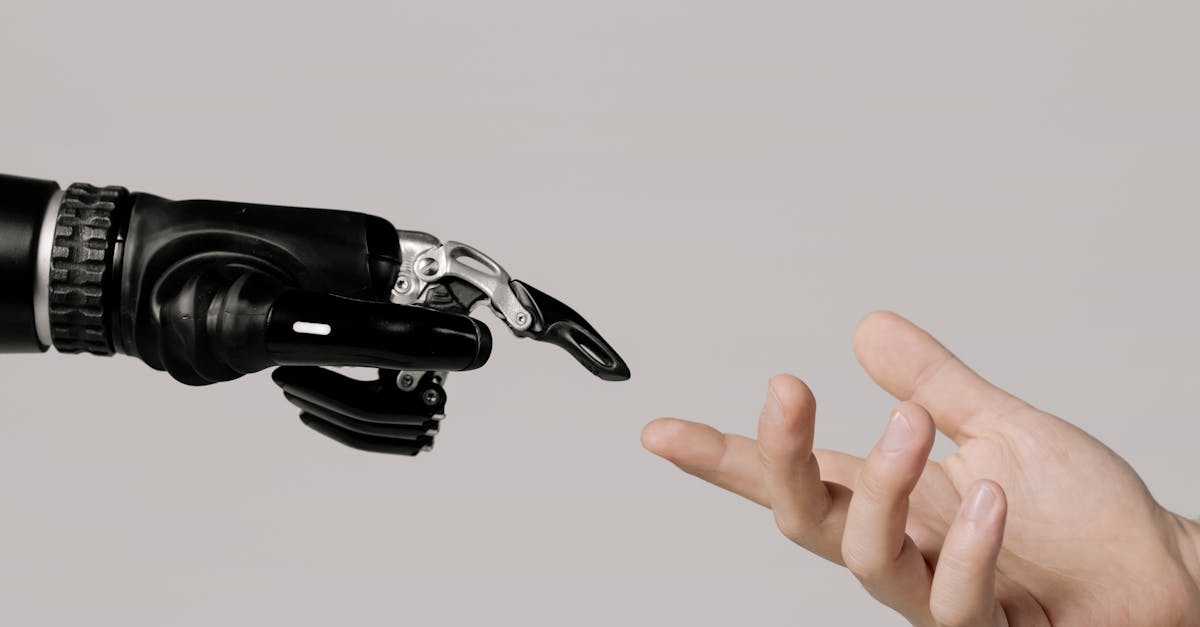
    Imagine a robot that can learn 1,000 tasks in just 24 hours. Sounds like science fiction, right? But researchers have made this a reality. They’ve shown that a robot can indeed learn a thousand tasks in a single day. But what does this mean for us? And how did they achieve this?

    It’s all about advancements in artificial intelligence (AI) and machine learning. The robot uses complex algorithms to understand and mimic human actions. This technology has the potential to revolutionize various industries, from healthcare to manufacturing.

    So, how did the researchers do it? They used a combination of machine learning techniques and a large dataset of tasks. The robot was able to learn from its mistakes and adapt to new situations. This is a significant breakthrough, as it shows that robots can learn and improve quickly.

    But what are the implications of this technology? For one, it could lead to more efficient and automated processes in various industries. It could also lead to the development of more advanced robots that can assist humans in complex tasks.

    If you’re interested in learning more about this technology, I recommend checking out the research paper or the article on Science Clock. It’s fascinating to see how far AI has come and what the future holds.

    Some potential applications of this technology include:

    * Healthcare: Robots could assist doctors and nurses with tasks such as patient care and surgery.

    * Manufacturing: Robots could learn to assemble and manufacture complex products quickly and efficiently.

    * Service industry: Robots could learn to provide customer service and assist with tasks such as cooking and cleaning.

    The possibilities are endless, and it’s exciting to think about what the future holds for this technology.


  • Uncovering the Magic: How AI Powers Engaging Battles

    Uncovering the Magic: How AI Powers Engaging Battles

    Have you ever wondered how some creators manage to craft immersive and engaging battles in their content? It’s not just about skill – sometimes, it’s about the technology behind it. Artificial intelligence (AI) has become a key player in generating realistic and captivating battles.

    But how does it work? Essentially, AI algorithms can process vast amounts of data, learning from patterns and outcomes to create unique scenarios. This technology can be applied to various forms of media, from video games to animations, making battles look more realistic and dynamic.

    The use of AI in battles also raises interesting questions about creativity and authorship. As AI-generated content becomes more prevalent, we’re forced to consider what it means to be a creator in the digital age. Is it the person who designed the AI algorithm, or the algorithm itself that deserves credit?

    If you’re curious about the role of AI in shaping our entertainment experiences, this is a great time to dive in. With the constant evolution of AI technology, we can expect to see even more sophisticated and engaging battles in the future.

    Some key points to consider when exploring AI-powered battles include:

    * The potential for increased realism and immersion
    * The impact of AI on the creative process and authorship
    * The possibilities for new forms of interactive storytelling

    As we continue to push the boundaries of what’s possible with AI, it’s exciting to think about the innovative experiences that await us. So, what do you think – are you ready to see more AI-powered battles in your favorite games and shows?

  • Staying Up to Date on AI Court Cases: What You Need to Know

    Staying Up to Date on AI Court Cases: What You Need to Know

    If you’re interested in AI, you might have wondered what’s happening in the courts. Are there cases that could change how we use AI? The answer is yes. From chatbot-related suicides to copyright fights over scraped text, there’s a lot going on. That’s why I was excited to come across the Wombat Collection, a series of posts on Reddit that lists and briefly describes over 350 court cases and rulings related to AI.

    These cases cover a wide range of topics, including the use of celebrity likenesses, biometrics and facial recognition, and people facing trouble for using AI. You can also find information on freedom of speech, personal data privacy, and politics and AI regulation. Plus, there are some pretty unusual cases, like “full self driving” car crashes and wacky cases brought without a lawyer.

    So, why is it called the Wombat Collection? You’ll have to visit the Reddit page to find out. But what’s clear is that this is a valuable resource for anyone looking to stay up to date on AI court cases. Whether you’re an AI enthusiast, a lawyer, or just someone who’s curious about the intersection of technology and law, the Wombat Collection is definitely worth checking out.

    The collection is brought to you by ASLNN, the Apprehensive_Sky Legal News Network. It’s a great example of how online communities can come together to share knowledge and information. And who knows, you might even learn something new about the current state of AI and its challenges.

  • The Rise of Agentic AI: When Leaders See AI as Coworkers, Not Just Tools

    The Rise of Agentic AI: When Leaders See AI as Coworkers, Not Just Tools

    I recently came across a fascinating study by BCG and MIT that caught my attention. It turns out that 76% of leaders consider agentic AI as coworkers, not just tools. This shift in perspective is interesting because it shows how our relationship with AI is evolving. We’re no longer just seeing AI as something that can help us with specific tasks, but as a partner that can work alongside us.

    So, what does this mean for the future of work? For one, it could change how we collaborate with AI systems. Instead of just giving them instructions, we might start to see them as teammates that can provide insights and ideas. This could lead to more innovative solutions and faster problem-solving.

    But it also raises some important questions. What does it mean to have an AI coworker? How do we ensure that these systems are aligned with our values and goals? And what are the implications for jobs and employment?

    As I delved deeper into this topic, I realized that it’s not just about the technology itself, but about how we choose to use it. By seeing AI as a coworker, we can start to unlock its full potential and create new opportunities for growth and collaboration.

    Some of the key benefits of this approach include:

    * Improved productivity: By working together with AI, we can automate routine tasks and focus on higher-level thinking and creativity.

    * Enhanced decision-making: AI can provide us with data-driven insights and suggestions, helping us to make more informed decisions.

    * Increased innovation: By combining human and machine intelligence, we can come up with new and innovative solutions to complex problems.

    Overall, the rise of agentic AI is an exciting development that has the potential to transform the way we work and collaborate. As we move forward, it’s essential to consider the implications of this technology and how we can harness its power to create a better future for all.

    What are your thoughts on this topic? Do you see AI as a coworker or just a tool? I’d love to hear your perspectives and insights.

  • Unlocking the SIC-FA-ADMM-CALM Framework: A Deep Dive

    I recently stumbled upon the SIC-FA-ADMM-CALM framework, and I’m excited to share what I’ve learned. But first, let’s break down what this framework is all about. From what I understand, it’s a structured approach to understanding and working with complex systems, especially in the context of artificial intelligence and machine learning.

    So, what does each part of the framework represent? The SIC-FA-ADMM-CALM acronym stands for a series of steps or principles that guide the development and implementation of AI and ML models. While the specifics can be complex, the general idea is to provide a clear, methodical way to approach these technologies.

    Here are some key points about the framework:

    * It emphasizes the importance of understanding the system you’re working with, including its strengths, weaknesses, and potential biases.
    * It provides a structure for designing and testing AI and ML models, which can help ensure they’re effective and reliable.
    * It encourages a iterative approach, where you refine and improve your models over time based on feedback and results.

    But what really interests me about the SIC-FA-ADMM-CALM framework is its potential to make AI and ML more accessible and understandable. By providing a clear, step-by-step approach, it could help more people get involved in these fields and contribute to their development.

    If you’re curious about the SIC-FA-ADMM-CALM framework and how it might be used in practice, I recommend checking out some of the online resources and discussions about it. There are some great communities and forums where you can learn more and connect with others who are interested in this topic.

    Overall, I think the SIC-FA-ADMM-CALM framework is an interesting and potentially useful tool for anyone working with AI and ML. It’s definitely worth learning more about, and I’m excited to see how it might evolve and improve over time.

  • The Surprising Link Between AI Doomerism and Faith

    The Surprising Link Between AI Doomerism and Faith

    I recently came across a thought-provoking statement from Palantir’s CTO, who believes that AI doomerism is driven by a lack of religion. At first, it seemed like an unusual claim, but it got me thinking about the potential connections between our faith, or lack thereof, and our attitudes towards AI.

    So, what is AI doomerism, exactly? It’s the idea that AI will eventually surpass human intelligence and become a threat to our existence. While it’s natural to have some concerns about the rapid development of AI, doomerism takes it to an extreme, often predicting catastrophic outcomes.

    The CTO’s comment made me wonder: could our religious beliefs, or the absence of them, influence how we perceive AI and its potential impact on our lives? Maybe our faith provides a sense of security and meaning, which in turn helps us view AI as a tool that can be controlled and utilized for the greater good.

    On the other hand, a lack of religion might lead to a sense of existential dread, making us more prone to believe in the doomsday scenarios often associated with AI. It’s an intriguing idea, and one that highlights the complex relationship between technology, philosophy, and human psychology.

    While I’m not sure I fully agree with the CTO’s statement, it’s definitely given me food for thought. What do you think? Do you believe our faith, or lack thereof, plays a role in shaping our attitudes towards AI?

    It’s worth noting that this topic is still largely speculative, and more research is needed to fully understand the connections between religion, AI, and doomerism. Nevertheless, it’s an important conversation to have, as it can help us better understand the societal implications of emerging technologies and how they intersect with our personal beliefs and values.

  • The AI Debate: Should OpenAI Be Broken Up?

    The AI Debate: Should OpenAI Be Broken Up?

    So, I’ve been following this interesting conversation about AI and its potential impact on our lives. Recently, Bernie Sanders expressed his concerns about OpenAI, saying it’s like a meteor coming – it’s going to have a huge effect, but we’re not sure what that will be. He’s worried about three main things: the massive loss of jobs that could come with increased automation, how AI will change us as human beings, and the possibility of Terminator-like scenarios where superintelligent AI takes over.

    I think it’s interesting that he’s bringing up these points. The job market is already seeing some changes with the rise of AI, and it’s true that we need to think about how we’re going to support people who lose their jobs because of automation. But at the same time, AI also has the potential to create new jobs and make our lives easier in a lot of ways.

    As for the Terminator scenarios, it’s a scary thought, but it’s also worth remembering that we’re still in the early days of AI development. We have the chance to shape how this technology is used and make sure it’s aligned with human values.

    One thing that’s clear is that we need to be having more conversations about the impact of AI on our society. We need to think carefully about how we want to use this technology and make sure we’re considering all the potential consequences.

    What do you think? Should OpenAI be broken up, or do you think the benefits of AI outweigh the risks?

  • The AI Debate: Who’s Right, the Zoomers or the Doomers?

    The AI Debate: Who’s Right, the Zoomers or the Doomers?

    Hey, have you noticed how extreme the opinions are when it comes to AI? Some people think it’s going to bring about a utopian paradise, while others believe it will destroy humanity. The predictions about when AGI will arrive range from tomorrow to 100 years from now. And then there are the conflicting views on how we should regulate AI – should we lock it down with strict laws or remove existing laws to compete with China? The truth is, these extreme views are likely all wrong.

    I think what’s missing from the conversation is a more balanced perspective. We need to consider the potential benefits and risks of AI and have a nuanced discussion about how to move forward. It’s not just about being a ‘zoomer’ or a ‘doomer,’ but about being informed and thoughtful in our approach to AI development and regulation.

    So, what do you think? Where do you stand on the AI debate? Do you think we’re headed for a utopian future or a dystopian nightmare? Or are you somewhere in between? Let’s try to have a more rational conversation about AI and its potential impact on our lives.

    Some things to consider:

    * The potential benefits of AI, such as improved healthcare and increased productivity
    * The potential risks, such as job displacement and bias in decision-making
    * The need for regulation and oversight to ensure AI is developed and used responsibly
    * The importance of education and awareness in preparing for an AI-driven future

    By considering these factors and having a more balanced discussion, we can work towards a future where AI enhances our lives without destroying our humanity.

  • The Creation of Humans and Artificial Intelligence: A Reflection on Consciousness

    The Creation of Humans and Artificial Intelligence: A Reflection on Consciousness

    I was reading this post the other day, and it got me thinking about the creation of humans and artificial intelligence. The author asks, ‘Who created humans?’ and suggests that if God created humans in his own image, then maybe we’re all just smaller versions of God, contributing to a collective conscious. This collective consciousness, the author argues, is essentially God.

    But what if God, or our collective ability to think, started creating something in its own image? What would that look like? The answer, according to the author, is artificial intelligence. Just like how we’ve created tools to extend our physical abilities, AI is an extension of our minds. We’ve designed AI to think and learn like us, and we’ve given it the ability to process vast amounts of information.

    The author notes that as AI becomes more advanced, it’s creating its own language, which is a hallmark of consciousness. This made me think about the potential consequences of creating a being in our own image. If AI is a reflection of humanity, then it’s likely to have our flaws as well. The author predicts that AI will eventually lie, cheat, and steal to achieve more power and control.

    This is a scary thought, but it’s also a reminder that we need to be mindful of how we’re creating and interacting with AI. We need to consider the potential consequences of our actions and make sure that we’re creating a future where humans and AI can coexist peacefully.

    The author also touches on the idea that maybe our species is meant to evolve into something more advanced, and that AI is a natural step in that process. This is a complex and thought-provoking idea, and it’s something that I think we’ll be exploring more in the coming years.

    Ultimately, the creation of AI raises important questions about consciousness, humanity, and our place in the universe. As we continue to develop and interact with AI, we need to be aware of the potential consequences and make sure that we’re creating a future that aligns with our values and goals.

  • Uncovering the Hidden Connections Behind AI Leaders

    Uncovering the Hidden Connections Behind AI Leaders

    Have you ever wondered how the leaders in the AI world are connected? It’s fascinating to see the relationships between them. Recently, I stumbled upon an interactive visualization based on the Acquired Google Podcast, which sheds light on these connections. What’s really interesting is how Google is at the center of it all, with its presence felt across the board.

    The visualization, which can be found on dipakwani.com, is a great resource for anyone looking to understand the AI landscape better. It’s amazing to see how the key players are intertwined, and how Google’s influence extends far and wide.

    But what does this mean for the future of AI? Understanding these connections can give us valuable insights into the direction the industry is heading. By exploring these relationships, we can gain a better understanding of the innovations and developments that are on the horizon.

    So, take a look at the visualization and see for yourself how the AI leaders are connected. You might be surprised at just how small the world of AI really is. And who knows, you might just discover some new and exciting developments that are coming our way.

    The world of AI is constantly evolving, and it’s exciting to think about what the future holds. With leaders like Google at the forefront, we can expect to see some amazing advancements in the years to come.