分类: Technology

  • Unlocking Smarter Workflows: Introducing Plano 0.4.3

    Unlocking Smarter Workflows: Introducing Plano 0.4.3

    Hey, have you heard about the latest update to Plano? It’s version 0.4.3, and it’s bringing some exciting changes to the table. As someone who’s interested in making workflows more efficient, I think you’ll find this pretty interesting.

    So, what’s new in Plano 0.4.3? Two main things: Filter Chains and OpenRouter Integration. Let’s break them down.

    Filter Chains are a way to capture reusable workflow steps in the data plane. Think of it like a series of mutations that a request flows through before reaching its final destination. Each filter is a network-addressable service that can inspect, mutate, or enrich the request. It’s like having a lightweight programming model over HTTP for building reusable steps in your agent architectures.

    Here are some key things that Filter Chains can do:

    * Inspect the incoming prompt, metadata, and conversation state
    * Mutate or enrich the request (like rewriting queries or building context)
    * Short-circuit the flow and return a response early (like blocking a request on a compliance failure)
    * Emit structured logs and traces for debugging and improvement

    The other major update is the introduction of Passthrough Client Bearer Auth. This allows Plano to forward the client’s original Authorization header to the upstream service, instead of using a static access key. It’s useful for deploying Plano in front of LLM proxy services that manage their own API key validation.

    Some potential use cases for this include:

    * OpenRouter: Forward requests to OpenRouter with per-user API keys
    * Multi-tenant Deployments: Allow different clients to use their own credentials via Plano

    Overall, these updates seem like a step in the right direction for making Plano more powerful and flexible. If you’re working with agent architectures or LLM proxy services, it’s definitely worth checking out.

  • Detecting Surface Cracks on Concrete Structures with Machine Learning

    Detecting Surface Cracks on Concrete Structures with Machine Learning

    I’ve been fascinated by the potential of machine learning to improve infrastructure inspection. Recently, I came across a project that aims to detect surface cracks on concrete structures using ML algorithms. The idea is to train a model on images of cracked concrete surfaces, so it can learn to identify similar patterns in new images.

    But why is this important? Well, inspecting concrete structures for cracks is a crucial task, especially in construction and maintenance. Cracks can indicate structural weaknesses, which can lead to safety issues and costly repairs if left unchecked. By using ML to detect cracks, we can potentially automate this process, making it faster and more efficient.

    So, how does it work? The process typically involves collecting a dataset of images of concrete surfaces with cracks, annotating the images to highlight the cracks, and then training an ML model on this data. The model can then be used to predict the presence of cracks in new images.

    I think this is a great example of how ML can be applied to real-world problems. It’s not just about detecting cracks; it’s about improving safety and reducing maintenance costs. If you’re interested in learning more about this topic, I’d recommend checking out some research papers on ML-based crack detection or exploring online resources like GitHub repositories and blogs.

    Some potential applications of this technology include:

    * Inspecting bridges and buildings for structural damage
    * Monitoring concrete structures in harsh environments, like coastal areas
    * Automating quality control in construction projects

    It’s exciting to think about the possibilities of ML in this field. As the technology continues to evolve, we can expect to see more accurate and efficient crack detection systems.

    What do you think about the potential of ML in infrastructure inspection? Have you come across any interesting projects or applications in this area?

  • Daily AI Updates: What You Need to Know

    Daily AI Updates: What You Need to Know

    Hey, let’s talk about the latest AI news. There are some pretty interesting developments happening right now. For instance, OpenAI just signed a $10 billion deal with Cerebras for AI computing. This is huge because it shows how much investment is going into making AI more powerful and accessible.

    But that’s not all. There’s a new generative AI tool called MechStyle that’s helping people 3D print personal items that can withstand daily use. Imagine being able to create custom items that fit your needs perfectly, just by using AI. It’s pretty cool.

    AI is also making progress in solving high-level math problems. This could lead to breakthroughs in all sorts of fields, from science to finance. And while it’s exciting, it’s also important to consider the potential risks and challenges that come with advanced AI capabilities.

    On a more serious note, California is investigating xAI and Grok over sexualized AI images. This is a reminder that as AI becomes more integrated into our lives, we need to make sure it’s being used responsibly and ethically.

    These are just a few examples of what’s happening in the world of AI right now. It’s an exciting time, but it’s also important to stay informed and think critically about how AI is shaping our world.

  • Busting Common Tech Myths That Still Mislead People

    Busting Common Tech Myths That Still Mislead People

    Hey, have you ever caught yourself believing some outdated tech myths? I know I have. It’s easy to get stuck with old ideas, especially when it comes to privacy, batteries, and device performance. Let’s break down some of these myths and see what’s really going on.

    So, what are some of these common tech myths? Here are a few examples:

    * Incognito mode makes you anonymous: Not quite. While incognito mode does delete your browsing history and cookies, it doesn’t make you completely anonymous. Your IP address can still be tracked, and websites can use other methods to identify you.

    * Macs don’t get malware: Sorry, Mac users, but this one’s just not true. While Macs are generally considered to be more secure than PCs, they can still get malware. It’s just less common.

    * Charging overnight kills battery health: This used to be true for older batteries, but most modern devices have built-in safeguards to prevent overcharging. So, go ahead and charge your phone overnight without worrying.

    * More specs always means faster devices: Not always. While having more RAM or a faster processor can improve performance, it’s not the only factor. Other things like software optimization and device design can also play a big role.

    * Public WiFi with a password is safe: Unfortunately, no. Just because a public WiFi network has a password, it doesn’t mean it’s secure. You should still be cautious when using public WiFi, especially when entering sensitive information.

    It’s interesting to see how these myths have evolved over time. As technology changes, our understanding of it needs to change too. By being aware of these myths, we can make more informed decisions about how we use our devices and protect ourselves online.

    So, what’s the most common tech myth you’ve heard recently? Let’s keep the conversation going and help each other stay up-to-date with the latest tech facts.

  • Your Daily AI Update: Robots in Factories and AI Chatbots in Courts

    Your Daily AI Update: Robots in Factories and AI Chatbots in Courts

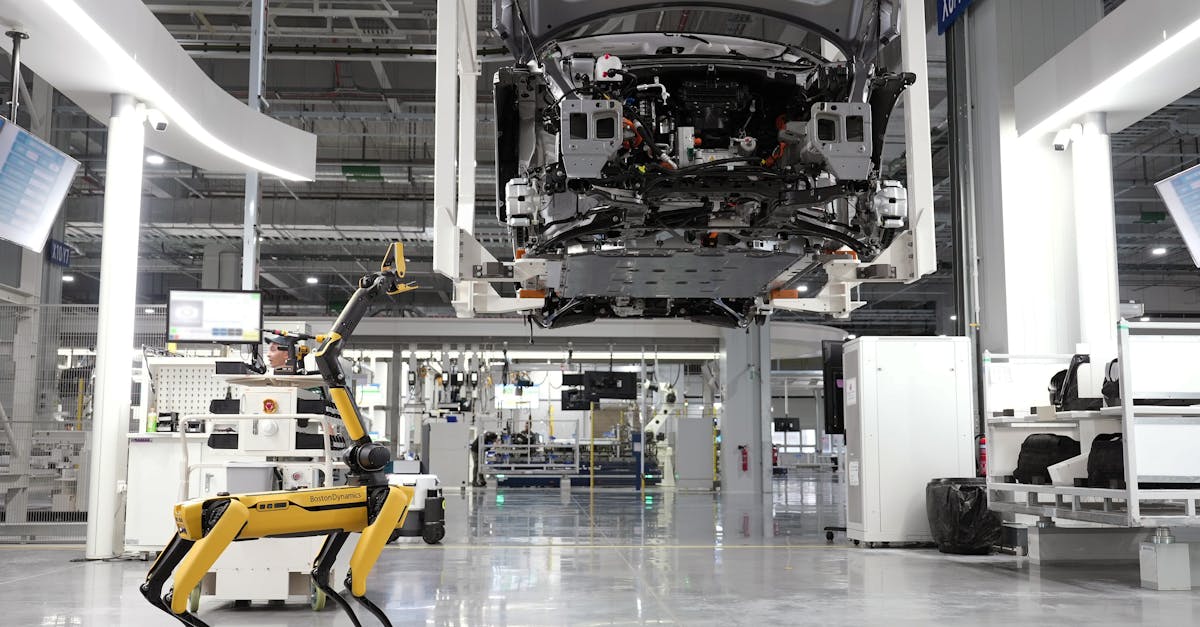
    Hey, have you been keeping up with the latest AI news? There’s been some interesting developments recently. Boston Dynamics is working on an AI-powered humanoid robot that can learn to work in a factory. This could be a big deal for manufacturing and automation. But it’s not just about robots – Alaska’s court system has also been experimenting with an AI chatbot. Unfortunately, it didn’t quite go as planned.

    Meanwhile, India has ordered Musk’s X to fix some issues with their AI content. It seems like there were some problems with ‘obscene’ content being generated. And in the world of research, DeepSeek has been working on a new algorithm to fix instability in hyper connections. It’s based on a 1967 matrix normalization algorithm – who knew old ideas could still be useful today?

    These are just a few of the latest updates from the world of AI. It’s exciting to see how this technology is evolving and being applied in different areas. From robots in factories to chatbots in courts, AI is definitely changing the way we do things.

    If you’re curious about the sources, I’ve got you covered. You can check out the links to learn more about each of these stories. And if you’ve got any thoughts on the latest AI developments, I’d love to hear them.

  • Why Apple Needs to Supercharge Siri with AI

    Why Apple Needs to Supercharge Siri with AI

    I’ve been thinking, what if Siri was so good that it alone could convince older iPhone users to upgrade to the latest model? It sounds like a tall order, but hear me out. With the rapid advancements in AI, it’s not too far-fetched to imagine a virtual assistant that’s not just helpful but revolutionary.

    So, what would it take for Siri to reach this level? For starters, Apple would need to significantly improve Siri’s ability to understand natural language and context. No more frustrating moments of repeating yourself or dealing with misunderstandings. It should be able to learn your habits and preferences over time, offering personalized suggestions and automating routine tasks.

    But that’s not all. An AI-charged Siri could also integrate seamlessly with other Apple devices and services, making it a central hub for your digital life. Imagine being able to control your smart home devices, schedule appointments, and even generate content with just your voice.

    Of course, there are also concerns about privacy and security. As Siri becomes more powerful, it’s essential that Apple prioritizes user protection and transparency. This means being clear about what data is being collected, how it’s being used, and giving users control over their information.

    If Apple can pull this off, it could be a game-changer for the company. Not only would it give users a compelling reason to upgrade, but it would also demonstrate Apple’s commitment to innovation and customer experience. So, what do you think? Would a supercharged Siri be enough to convince you to upgrade to the latest iPhone?

  • Is GPT 5.1 a Step Backwards?

    Is GPT 5.1 a Step Backwards?

    I recently came across a post claiming that GPT 5.1 is dumber than its predecessor, GPT 4. The author couldn’t find a single thing that the new version does better. This got me thinking – what’s going on with the latest AI models? Are they really improving, or are we just getting caught up in the hype?

    It’s no secret that AI technology is advancing rapidly. New models are being released all the time, each promising to be more powerful and efficient than the last. But is this always the case? It’s possible that in the rush to innovate, some models might actually be taking a step backwards.

    So, what could be causing this? Maybe it’s a case of over-complication. As AI models get more complex, they can sometimes lose sight of what made their predecessors great in the first place. It’s like trying to add too many features to a product – eventually, it can become bloated and difficult to use.

    On the other hand, it’s also possible that the author of the post just hadn’t found the right use case for GPT 5.1 yet. Maybe there are certain tasks that the new model excels at, but they haven’t been discovered yet.

    Either way, it’s an interesting discussion to have. Are AI models always getting better, or are there times when they take a step backwards? What do you think?

  • The Unexpected Field Study: How a Machine Learning Researcher Became a Retail Associate

    The Unexpected Field Study: How a Machine Learning Researcher Became a Retail Associate

    I never thought I’d be writing about my experience as a retail associate, but here I am. With an MS in CS from Georgia Tech and years of experience in NLP research, I found myself picking groceries part-time at Walmart. It’s a long story, but the job turned out to be an unexpected field study. I started noticing that my role wasn’t just about walking and picking items, but about handling everything the system got wrong – from inventory drift to visual aliasing and spoilage inference.

    As I observed these issues, I realized that we’re trying to retrofit automation into an environment designed for humans. But what if we built environments designed for machines instead? This is the conclusion I came to after writing up my observations, borrowing vocabulary from robotics and ML to name the failure modes.

    I’m not saying ‘robots are bad.’ I’m saying we need to think about how we can design systems that work with machines, not against them. This is a much shorter piece than my recent Tekken modeling one, but I hope it sparks some interesting discussions.

    If you work in robotics or automation, I’d love to hear your thoughts. Have you ever found yourself in a similar situation, where you had to adapt to a system that wasn’t designed with machines in mind? Let’s connect and discuss.

  • The Hidden 90% of Machine Learning Engineering

    The Hidden 90% of Machine Learning Engineering

    Hey, if you’re interested in machine learning, you’ve probably heard that building models is just a small part of the job. In fact, it’s often said that model-building is only about 10% of what ML engineers do. The other 90% is made up of tasks like data cleaning, creating feature pipelines, deployment, monitoring, and maintenance. But is this really true?

    As someone who’s starting to learn about ML, it can be a bit misleading. We spend most of our time in school learning about the models themselves, not the surrounding tasks that make them work in the real world. So, how do ML engineers actually get good at the non-model parts of their job? Do they learn it on the job, or is it something you should invest time in to get noticed by potential employers?

    I think the key is to find a balance between learning the theory and models, and the practical skills you need to deploy and maintain them. It’s not just about building a great model; it’s about making it work in the real world. This means learning about data preprocessing, how to create efficient pipelines, and how to deploy your models in a way that’s scalable and reliable.

    Some ways to get started with the non-model aspects of ML engineering include:

    * Learning about data preprocessing and feature engineering
    * Practicing with deployment tools like Docker and Kubernetes
    * Experimenting with monitoring and maintenance techniques
    * Reading about the experiences of other ML engineers and learning from their mistakes

    By focusing on these areas, you can set yourself up for success as an ML engineer and make your models a reality.

  • Robot Learns 1,000 Tasks in Just 24 Hours – What Does This Mean?

    Robot Learns 1,000 Tasks in Just 24 Hours – What Does This Mean?

    Imagine a robot that can learn 1,000 tasks in just 24 hours. Sounds like science fiction, right? But researchers have made this a reality. They’ve shown that a robot can indeed learn a thousand tasks in a single day. But what does this mean for us? And how did they achieve this?

    It’s all about advancements in artificial intelligence (AI) and machine learning. The robot uses complex algorithms to understand and mimic human actions. This technology has the potential to revolutionize various industries, from healthcare to manufacturing.

    So, how did the researchers do it? They used a combination of machine learning techniques and a large dataset of tasks. The robot was able to learn from its mistakes and adapt to new situations. This is a significant breakthrough, as it shows that robots can learn and improve quickly.

    But what are the implications of this technology? For one, it could lead to more efficient and automated processes in various industries. It could also lead to the development of more advanced robots that can assist humans in complex tasks.

    If you’re interested in learning more about this technology, I recommend checking out the research paper or the article on Science Clock. It’s fascinating to see how far AI has come and what the future holds.

    Some potential applications of this technology include:

    * Healthcare: Robots could assist doctors and nurses with tasks such as patient care and surgery.

    * Manufacturing: Robots could learn to assemble and manufacture complex products quickly and efficiently.

    * Service industry: Robots could learn to provide customer service and assist with tasks such as cooking and cleaning.

    The possibilities are endless, and it’s exciting to think about what the future holds for this technology.